
Every landlord knows the access headaches: keys that get copied, locks that need changing every time a tenant moves out, propped lobby doors, and the uneasy question of who exactly can get into the building right now. Modern access control solves most of that — replacing copyable keys with credentials you control from software, and turning tenant turnover from a locksmith call into a few clicks. For a New York building, though, it has to be done with the city’s particular rules in mind. Here’s what landlords should know, from an integrator who equips these buildings across the boroughs.
Why Apartment Buildings Need Modern Access Control
Traditional keys are a liability in a multi-tenant building. They get duplicated without your knowledge, they’re not tied to a person, and when a tenant leaves you either change the lock or accept that a copy may still be out there. Multiply that across dozens of units and constant turnover, and a key-based building is never quite secure.
Access control replaces keys with credentials you manage centrally: you know who has access, you can grant and revoke it instantly, and every entry can be logged. For a landlord, that’s the difference between hoping the building is secure and actually controlling who comes through the door.
Credential Options for Tenants
Tenants can be given access in a few ways, and the right mix depends on your building and residents:
- Key fobs: the familiar choice — durable, easy to issue, and simple for tenants to use on a keychain.
- PIN codes: no hardware needed, but easily shared, so they should be used thoughtfully.
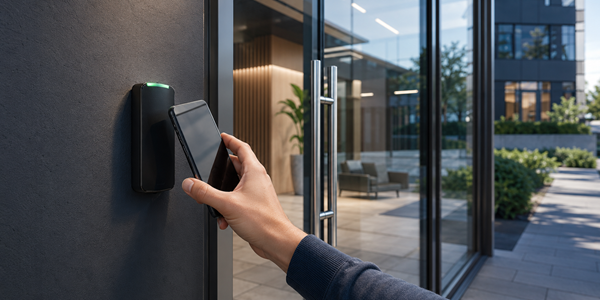
- Mobile credentials: increasingly the standout for residential — tenants use their phones, there’s nothing physical to issue or collect, and you manage everything in software.
Many buildings offer a combination — mobile for residents who want it, fobs for those who prefer them — so no one is forced onto a single method. The goal is access that’s easy for tenants and controllable for you.
Handling Tenant Turnover (Instant Revocation)
This is where modern access control earns its keep in a rental building. When a tenant moves out, you don’t change a lock or hope you’ve collected every key — you deactivate their credential in software, instantly, and their access is gone. A new tenant is granted access the same way, ready for move-in day without a locksmith.
In a building with regular turnover, that instant revocation isn’t just convenient; it closes the security gap that copied keys leave wide open, and it saves the recurring cost and hassle of rekeying. For a landlord, it’s the feature that quietly pays for itself.
Common Entry Points to Secure
A building has more ways in than the front door, and a complete plan covers them:
- Main lobby entrance: the obvious one, controlling who reaches the units at all.
- Parking garages and rear or service entrances: common weak points that deserve the same control.
- Amenity spaces: gyms, laundry rooms, roof decks, package rooms, and common areas — restricted to residents, or to specific tenants where you like.
Securing each of these with managed access, rather than a key that opens everything, lets you control the building zone by zone and keep amenities for the people entitled to them.
Integrating With Intercom and Cameras
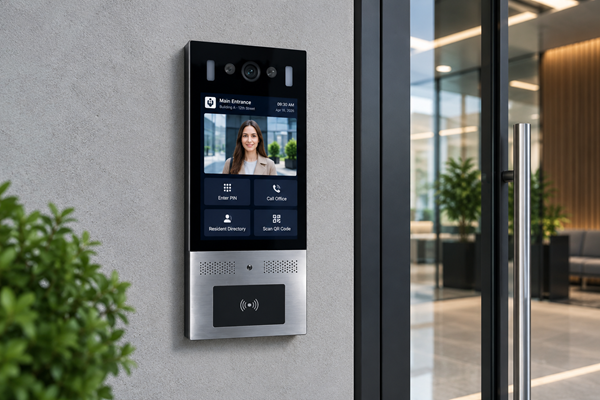
Access control works best as part of a connected building system. Tied to a video intercom, residents can see and buzz in visitors and deliveries from their phones, and the same platform that manages tenant credentials can govern entry.
Paired with cameras at the entrances, every access event can be matched to video — so a flagged or forced entry comes with footage attached, valuable for a landlord or board reviewing an incident. Designed together, intercom, cameras, and access control give you entry that’s both convenient for residents and accountable for management.
NYC Building Considerations (FDNY Egress, Co-op / Condo Rules)
New York adds requirements that shape any installation:
- Fire and life-safety codes: controlled doors on exit paths must allow people to get out freely and release appropriately in an emergency, so a security measure never becomes a safety hazard — exactly the kind of detail the FDNY and building codes care about.
- Co-op / condo approval: you’ll typically need board or management sign-off before installing, and there may be building-specific rules to follow.
- Older buildings: existing wiring and door hardware bring their own wrinkles.
A professional integrator navigates these as a matter of course, designing a system that secures the building while meeting its obligations. This is general guidance rather than legal or code advice, so specific requirements for your building are worth confirming.
How 4Wires Equips NYC Buildings
Securing a residential building is part technology, part knowing the city’s rules — and we handle both. 4Wires Communications equips apartment buildings across the New York metro, working with access platforms like Keri and intercoms from Akuvox, DoorKing, and Aiphone. We secure your entrances, garages, and amenities, set up tenant credentials and instant turnover revocation, integrate intercom and cameras, and design around fire egress and your building’s requirements. The result is a building that’s easier to manage and genuinely more secure.
Upgrading access for your building? Learn more about our access control installation services, or reach out for a free on-site assessment.