
Controlling who gets into your building used to mean a server humming in a closet and a workstation you had to physically sit at to change anything. Cloud-based access control changes that — letting you manage doors, users, and permissions from anywhere, through a browser or an app. For most businesses today, it’s the more capable and convenient approach, and it’s quickly becoming the default. Here’s what it is, how it differs from the traditional on-premises model, and where it wins, from a New York integrator who deploys it across the city.
What Cloud-Based Access Control Is
Cloud-based access control runs the management software for your system on secure remote servers rather than on a server in your building. The hardware on your doors — readers, locks, and controllers — stays on site as always, but the brains that store permissions, schedules, and logs live in the cloud, and you reach them over the internet.
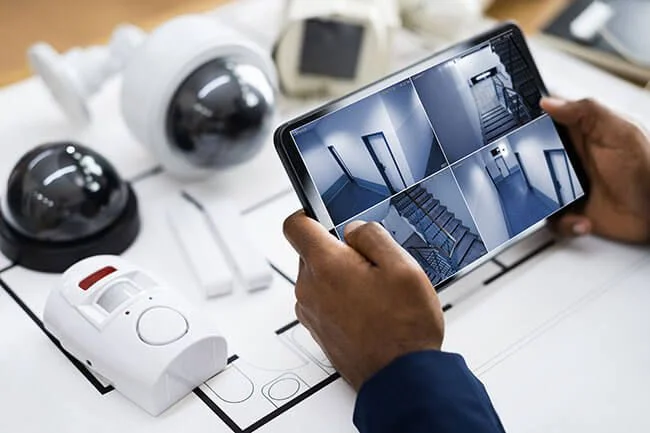
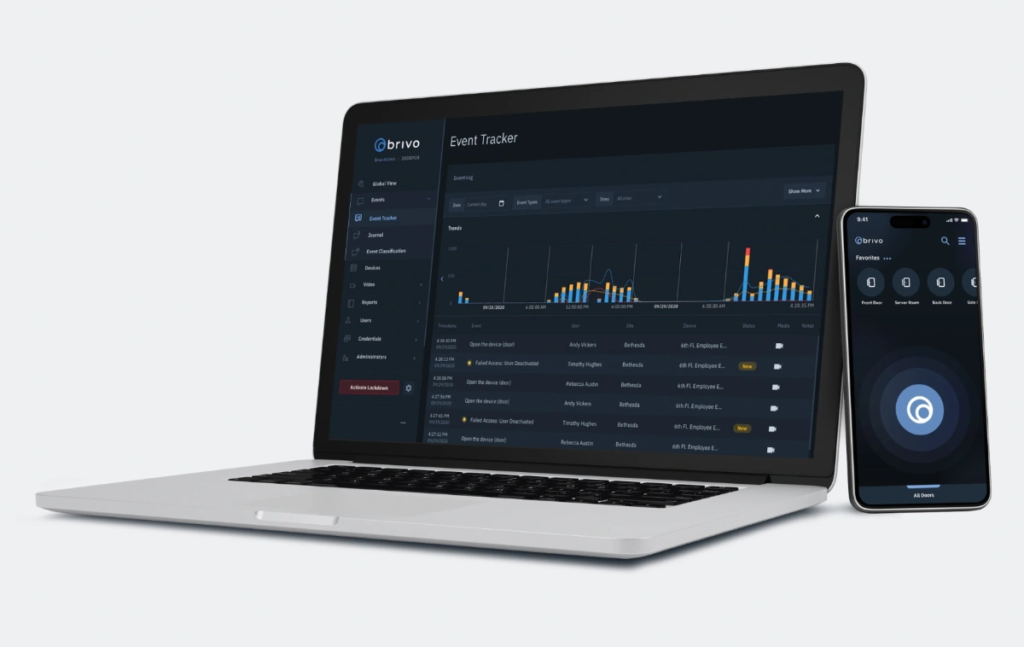
In practice, that means you administer the whole system from a web dashboard or mobile app: adding a user, changing a schedule, or locking a door is something you do from your office, your home, or your phone, rather than from one fixed computer.
How It Differs From On-Prem Systems
The contrast with a traditional on-premises system is mostly about where the management lives and what that means for you. With on-prem, the software and data sit on a local server you own and maintain, and managing the system generally means being on site or wrestling with remote access into that server — and you’re responsible for its updates, backups, and upkeep.
Cloud flips that: the provider hosts and maintains the platform, updates and backups happen automatically, and you manage from anywhere. On-prem keeps everything physically in-house, which still appeals in specific cases; cloud trades that for accessibility and far less maintenance on your end.
Key Benefits
The advantages are what make cloud the default choice for most modern buildings.
Remote management and multi-site control
This is the headline benefit. You can manage access from anywhere — grant a new hire entry before they arrive, cut off a departed employee from your phone, or unlock a door remotely for a delivery. If you run more than one location, the appeal grows: cloud lets you oversee every site from a single dashboard rather than juggling a separate system at each one. For multi-site businesses, that unified control is hard to give up.
Automatic updates and backups
With cloud, the platform updates itself and backs up your data automatically, so you’re always on the current version without scheduling maintenance or worrying that a failed server takes your access records with it. That removes a real chunk of the upkeep that on-prem systems put on your plate.
Real-time logs and reports
Cloud platforms give you live visibility — who entered which door and when, available the moment it happens rather than after you pull a report off a local machine. That real-time access log is valuable for security, for reviewing an incident, and for simply knowing what’s going on across your doors at any time.
Security and Reliability Concerns (and the Answers)
Two worries come up with anything cloud-based, and both have solid answers:
- Reliability — what if the internet goes down? The door controllers keep a local copy of permissions, so doors keep working during an outage — they enforce the rules they already have and sync back up when the connection returns. Your building doesn’t lock up or fling open because the internet hiccuped.
- Security — is it safe to host access data in the cloud? Reputable providers encrypt data and offer protections like multi-factor authentication for administrators, and a professionally run cloud platform is often more secure than a neglected on-site server that nobody patches.
As with any system, sensible administration — strong credentials, limited admin accounts — matters.
Cost Model (Subscription vs. Server)
The cost shapes differ in a way worth understanding. On-prem is largely an upfront investment: buy the server and software, then maintain them. Cloud is typically a subscription, spreading cost over time in exchange for the provider hosting, updating, and backing up the platform.
Neither is automatically cheaper — cloud favors lower upfront cost and predictable ongoing fees with less maintenance burden, while on-prem favors one-time ownership. For many businesses, the reduced upkeep and the remote, multi-site capabilities tip the value toward cloud, but the right answer depends on your priorities.
Is Cloud Right for Your Building?
Cloud-based access control is the strong default for most situations, and especially compelling if you want to manage access remotely, run multiple locations, or avoid maintaining a server.
On-prem still has a place where data must stay physically in-house or where internet reliability is a genuine constraint. For the typical office, retail space, or multi-tenant building, though, the accessibility, automatic upkeep, and real-time visibility of cloud make it the forward-looking choice.
How 4Wires Deploys Cloud Access
Cloud access control delivers the most when it’s set up to fit how you operate. 4Wires Communications designs and deploys cloud-based access across the New York metro — installing the door hardware, configuring the platform around your doors, users, and schedules, and setting up the remote management, logging, and multi-site control you need. We handle the security and reliability details so you get the convenience of managing access from anywhere without the worries that sometimes come with it.
Considering cloud access control for your building? Learn more about our access control installation services, or reach out for a free on-site assessment.