
Put the spec sheets for Hikvision, Dahua, and Axis side by side and they start to blur — 4K sensors, the same lens options, similar night-vision claims. The decision that actually matters lives off the spec sheet: value versus premium, how mature the analytics really are, what happens when something breaks two years in, and — unique to this trio — whether you’re even allowed to install the brand on your project. Here’s how the three compare for commercial use, from the perspective of a New York integrator who works with all of them.
Hikvision — Strengths and Considerations
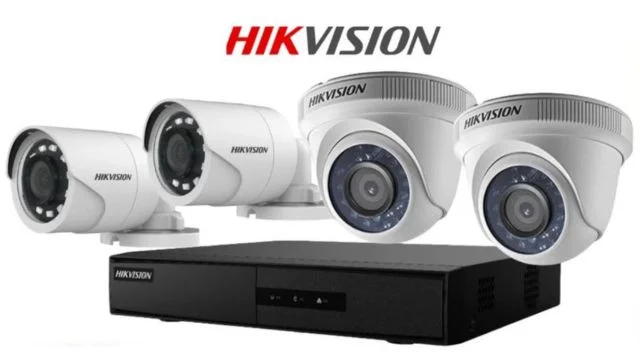
Hikvision is the largest camera manufacturer in the world, and it shows in the catalog: whatever the application — a discreet dome for a waiting room, a long-range bullet for a parking lot, a multi-sensor for a wide yard — there’s a model for it, usually at a price that’s hard to beat. The analytics are genuinely good for the money; their AcuSense line filters people and vehicles from leaves and headlights to cut false alerts. For a business that wants strong HD coverage and sensible smart detection without a premium budget, Hikvision delivers a lot per dollar.
The catch isn’t image quality — it’s procurement and policy, which we’ll cover in detail below. Hikvision faces U.S. federal restrictions, so for certain projects the brand is simply off the table regardless of how the cameras perform. Some private companies also steer clear on internal security policy. Where neither applies, the value case is strong.
Strengths
- The widest catalog in the industry — a model for nearly any application.
- Strong value: a lot of camera and capability per dollar.
- Mature AcuSense analytics that filter people and vehicles to cut false alerts.
- Broadly available and well supported in the trade.
Best for: budget-conscious private commercial installs with no government or federal-funding ties.
Dahua — Strengths and Considerations
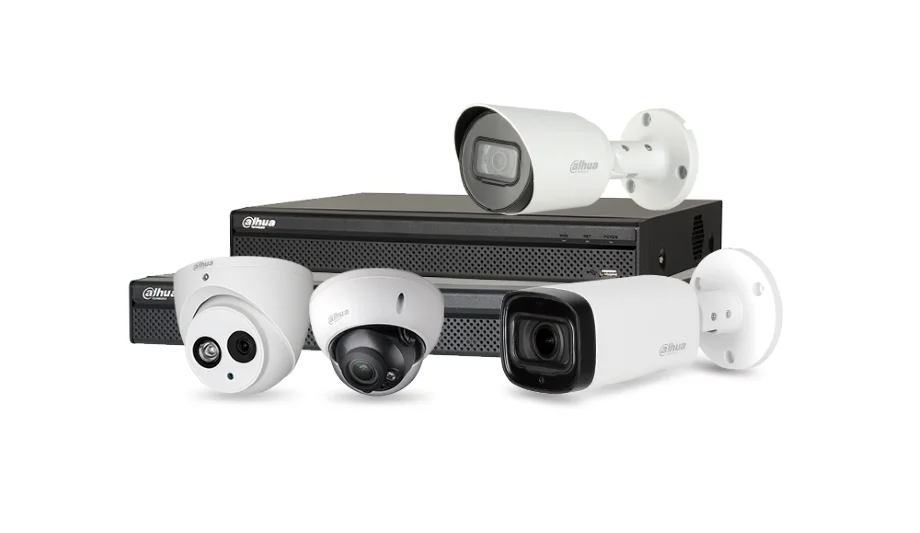
Dahua is the world’s second-largest manufacturer and sits in much the same place as Hikvision: a deep, capable lineup at aggressive prices, with mature analytics of its own (its WizSense range handles the same people-and-vehicle filtering). In day-to-day performance the two are close enough that the choice between them often comes down to which platform your integrator standardizes on and which management software you prefer. Dahua’s recorders and cameras are widely available and well supported in the trade.
Dahua carries the same federal-restriction footnote as Hikvision — the two are named together in the relevant rules — so the same procurement questions apply. For a private commercial site with no government tie and no policy bar, it’s another strong value option.
Strengths
- Deep, capable lineup at aggressive prices, much like Hikvision.
- Mature WizSense analytics with people-and-vehicle filtering.
- Widely available recorders and cameras, well supported in the trade.
Best for: value installs where you want a capable alternative to Hikvision — with the same procurement caveat.
Axis — Strengths and Considerations
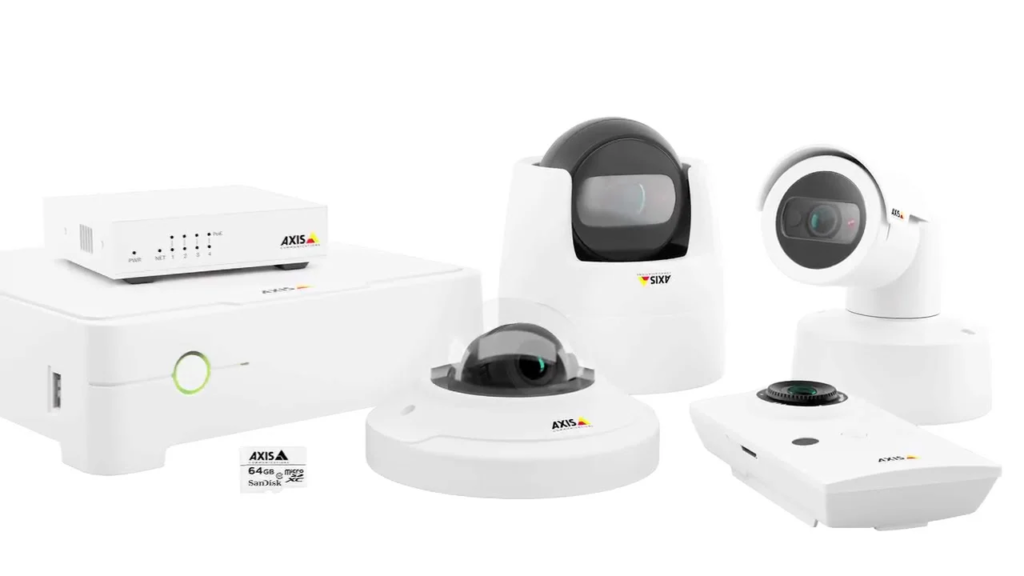
Axis is the Swedish company that effectively invented the network camera, and it plays a different game. The hardware is built to last, the firmware is mature and updated for years, and cybersecurity is treated as a first-class feature — signed firmware, encrypted traffic, and a long track record of responsible patching. Its ACAP platform lets you run sophisticated, even third-party, analytics on the camera itself. The trade-off is price: Axis sits firmly in the premium tier and you’ll pay more per camera.
What you’re buying at that price is longevity, polish, strong support and warranty, and — importantly — no procurement headaches. For demanding installs, long service life, or any environment where camera cybersecurity is scrutinized, Axis earns its premium.
Strengths
- Premium build quality and a long firmware-support track record.
- Best-in-class cybersecurity: signed firmware, encrypted traffic.
- Open ACAP platform for advanced, even third-party, on-camera analytics.
- Strong support and warranty; no federal procurement restrictions.
Watch-out: premium pricing — you’ll pay more per camera.
Best for: long-life installs, compliance-sensitive sites, and anywhere camera cybersecurity is scrutinized.
Side-by-Side Comparison
| Factor | Hikvision | Dahua | Axis |
|---|---|---|---|
| Image quality | Excellent for the price | Excellent for the price | Excellent, premium-tuned |
| Analytics | Strong (AcuSense) | Strong (WizSense) | Strong + open platform (ACAP) |
| Price tier | Value | Value | Premium |
| Cybersecurity / firmware | Good with diligence | Good with diligence | Best-in-class, long support |
| Support & warranty | Broad availability | Broad availability | Strong, long-term |
| U.S. federal procurement | Restricted (see below) | Restricted (see below) | No restriction |
| Best for | Value commercial installs | Value commercial installs | Premium, long-life, cyber-sensitive sites |
Compliance and Procurement Notes (NDAA, Government Projects)
This is the part that has nothing to do with picture quality and everything to do with whether you can use a brand at all. Under U.S. federal rules, Hikvision and Dahua equipment is restricted for federal agencies and for projects tied to federal funding or government contracts, and the FCC has moved to bar new authorizations of their gear. Axis, as a Swedish manufacturer, isn’t affected.
For a typical private commercial property in New York with no government connection, Hikvision and Dahua are widely installed and generally permissible. But the moment a project touches government work, federal grant money, certain regulated sectors, or a corporate policy that mirrors the federal stance, brand choice stops being about value and becomes a compliance question. These rules also evolve, so treat this as general education rather than legal advice — confirm the current requirements for your specific situation before you commit to a brand.
Which Brand for Which Use Case
In practice the decision usually sorts itself out quickly. A private retail shop, restaurant, or small office watching its budget is well served by Hikvision or Dahua — capable cameras, smart detection, strong value. A property with government ties, federal funding, or a strict security policy should plan around Axis (or another non-restricted brand) from the start. And any site that prizes long service life, demanding analytics, or airtight camera cybersecurity — think a building you intend to run for a decade without touching — is where Axis’s premium pays back.
To make it concrete: a federally funded charter school in Brooklyn falls squarely under the procurement rules, so we’d spec it on Axis end to end; a privately owned bodega two blocks away, with no such ties and a tight budget, is a textbook Hikvision or Dahua job. Same neighborhood, opposite answers — because the deciding factor was compliance, not the camera. Mixed environments are common, too: there’s nothing wrong with a system that pairs value cameras in low-stakes areas with premium units where it counts, as long as the management platform ties them together cleanly.

The Brand Isn’t the Whole Story
Keep brand choice in proportion, though. A premium camera pointed at the wrong angle, fed by an undersized recorder, or hung where a doorway backlights every face will lose to a value camera that was placed and configured properly.
Resolution, lens selection, field of view, recorder capacity, and a clean install drive the quality of your footage at least as much as the logo on the housing. Pick the brand that fits your budget and your compliance picture — then spend equal attention on where each camera goes, what it’s meant to capture, and how much storage stands behind it. That’s usually where systems are won or lost, long after the brand debate is settled.
How 4Wires Selects and Installs
The right brand depends on your property, your budget, and any compliance ties — not on which name is most popular. 4Wires Communications designs and installs systems built around all three across the New York metro, and we’ll steer you to the brand that fits: value-tier cameras where they make sense, premium where longevity or compliance demands it, and a management platform that runs the whole system as one. We handle the procurement questions up front so you don’t discover a brand problem after the cameras are on the wall.
Weighing a camera brand for your property? Learn more about our security camera installation services, or reach out for a free on-site assessment.