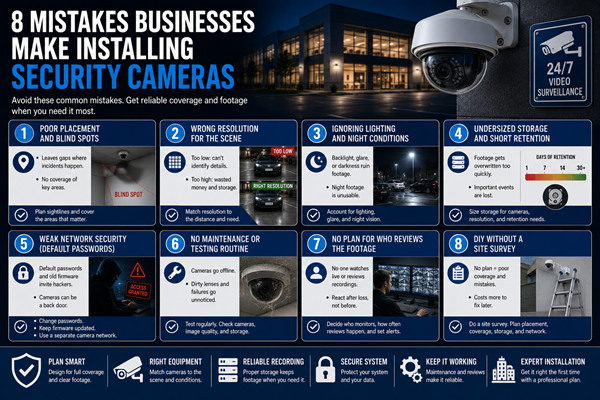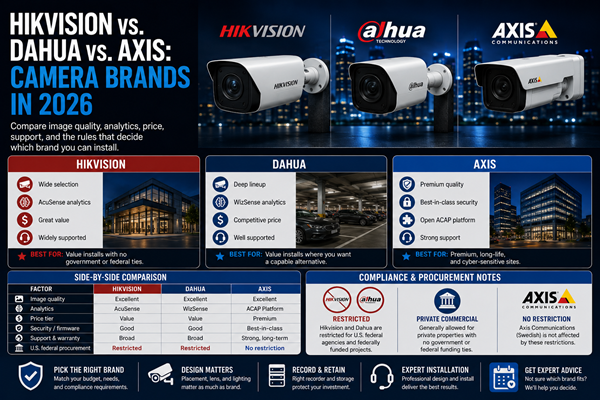

Security cameras protect your business — but record the wrong thing, in the wrong place, and a system meant to keep you safe can create legal exposure instead. For New York businesses, a handful of rules separate sensible surveillance from a problem, and most of them come down to common sense once you know where the lines are. This article walks through what you can and can’t record and how to stay on the right side of it. It’s general education, not legal advice — your specific situation should be reviewed by an attorney before you rely on it.
Video Recording: Where It’s Allowed
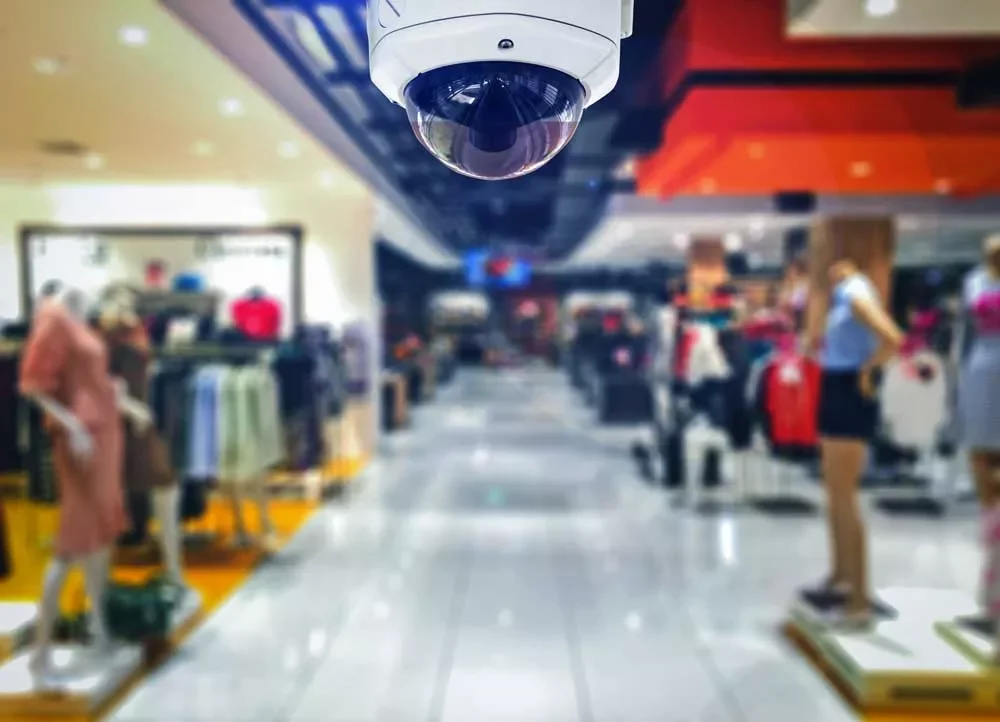
The general principle is straightforward: you can record video in areas where people don’t have a reasonable expectation of privacy. For a business, that covers the spaces you’d expect:
-
- Sales floors, entrances, and exits.
-
- Parking lots and exterior approaches.
-
- Hallways, lobbies, and stockrooms.
-
- The general workplace and work areas.
These are open, shared, or work areas where surveillance for security is widely accepted and legally sound. The vast majority of what a business wants to cover falls comfortably within this, so for ordinary security purposes video is rarely the issue — the complications start with audio and with the specific spaces where privacy is expected.
Audio Recording and Consent — the Big Risk
Audio is where businesses get into trouble, because it’s governed by different and stricter rules than video. New York’s eavesdropping law makes it a serious matter to record a conversation you aren’t a party to without consent. A security camera silently recording audio can easily capture private conversations between customers or employees — conversations the business isn’t part of — and that’s exactly the scenario the law is concerned with.
The safe, standard practice is to disable audio recording on security cameras, which most businesses do, and which sidesteps the risk entirely. If you believe you have a reason to record audio, that’s a question for your attorney before anything is switched on, not after.
Areas With an Expectation of Privacy (Off-Limits)
Some places carry a clear expectation of privacy, and cameras simply don’t belong there — recording in them can violate New York’s laws against unlawful surveillance. These are off-limits, full stop:
-
- Restrooms.
-
- Locker rooms and changing areas.
-
- Fitting rooms.
-
- Any space where people undress or reasonably expect privacy.
There’s no security justification strong enough to override this. When you plan camera placement, treat these as hard exclusions and angle nearby cameras so they can’t inadvertently capture into them either.
Employee Monitoring Rules and Notice
Employers can generally monitor work areas for security, but employees retain privacy in the off-limits spaces above, and transparency matters. As a rule, cameras belong in workspaces, not in restrooms or designated private break areas, and being open with staff about where cameras are and why is both good practice and, in various contexts, expected.
New York has rules around notifying employees of electronic monitoring, so the prudent approach is to inform your team that video surveillance is in use rather than running it covertly. Secret monitoring of employees invites both legal and trust problems; clear notice avoids most of them.
Signage and Disclosure Best Practices
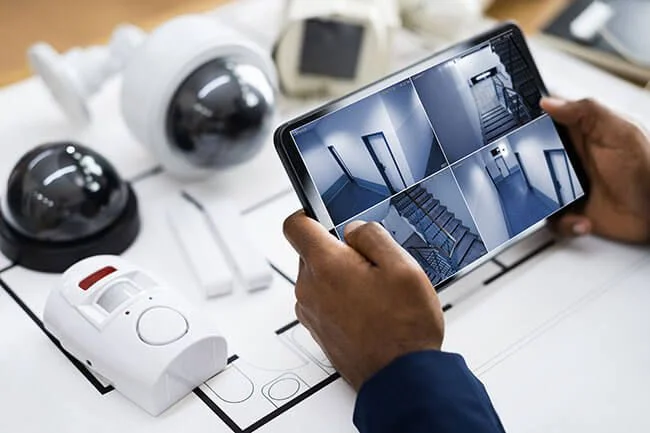
Posting visible notice that surveillance is in use is one of the simplest things you can do, and it works in your favor on multiple fronts:
-
- Transparency: keeps customers and staff informed.
-
- Deterrence: puts would-be offenders on notice before they act.
-
- Fewer disputes: reduces arguments about whether people knew they were recorded.
Place clear signage at entrances and in monitored areas. The specific legal requirement for signage varies by context, but disclosure is a best practice worth adopting regardless — it costs little and protects you in several ways.
Data Retention and Footage Requests
How you handle recorded footage matters as much as how you capture it. Keep footage only as long as you have a reason to — a documented retention policy, rather than holding everything indefinitely, both limits storage cost and reduces your exposure.
Be prepared for footage requests: law enforcement may seek recordings, typically through proper legal process, and having a clear policy for how you respond keeps things orderly. Treat the footage as the potentially sensitive record it is, with controlled access and sensible retention, and you avoid most of the problems that come from storing video carelessly.
How 4Wires Installs Compliant Systems
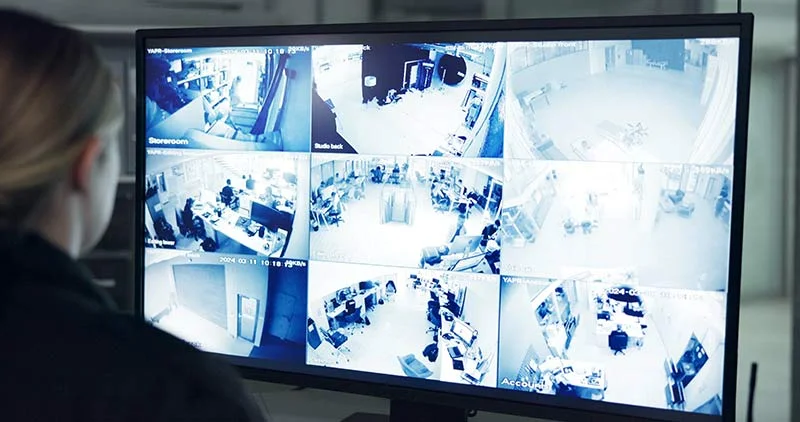
Staying on the right side of these rules is mostly about thoughtful design, which is exactly what a professional install brings. 4Wires Communications designs camera systems across the New York metro with compliance built in — placing cameras where video is appropriate, keeping audio and off-limits areas out of the picture, advising on signage and notice, and setting up sensible retention. We help you get the security you want without the legal exposure you don’t. This is general guidance rather than legal advice, so we’re glad to work alongside your attorney on anything specific to your business.
Want a camera system that protects your business the right way? Learn more about our security camera installation services, or reach out for a free on-site assessment.