
A gate at the entrance is only the visible part of community access. The harder job is the balance behind it: residents want to roll through without stopping, guests and deliveries need a controlled way in, and the whole thing has to keep working in a power cut and let emergency vehicles through instantly. Get that balance wrong and you either frustrate the people who live there or leave a gap anyone can drive through.
Here’s how the pieces fit — resident vehicle access, visitor management, the systems that tie it together, and the reliability details that matter most — from an integrator who secures communities across the New York area.
Resident Vehicle Access (RFID Tags and LPR)
Residents should reach their own gate with the least friction, and two technologies do that well. A long-range RFID windshield tag is read automatically as a car approaches — often from 10 to 30 feet — so the gate opens without anyone rolling down a window or stopping to present a card. It’s the most common and reliable method for resident vehicles.
License plate recognition (LPR) goes a step further: a camera reads the plate and matches it against an approved list, opening the gate with no tag at all. It’s convenient and useful as a record of who came and went, though it depends on clean, readable plates and good camera placement. Many communities use tags as the primary method and LPR as a complement, pairing automatic entry with a plate-by-plate log.
Visitor and Guest Management
Where resident access is about speed, visitor access is about control — letting the right guests in without handing the gate to everyone:
- Call-box entry: a visitor uses a gate intercom or directory to reach a resident, who confirms and releases the gate remotely — increasingly from a smartphone, so residents can buzz in a guest whether they’re home or not.
- Temporary codes and digital passes: residents can issue a one-time code or pass for an expected guest, a contractor, or a delivery, so the visitor lets themselves in once without a permanent credential.
- Logged guest entry: visitor events are recorded, giving the community a record of who was admitted and when — useful when management needs to review activity.
The aim is a visitor path that’s easy for residents to manage and accountable for the community, rather than a propped gate or a code that’s been passed around for years.
Pedestrian Gate and Amenity Access
Vehicles aren’t the only way in. A complete plan covers the pedestrian gate and the shared spaces, so the community is controlled on foot as well as by car. Pedestrian entrances can use fobs or mobile credentials, the same way a building entrance would, keeping walk-in access tied to residents rather than open to anyone.
Amenities deserve the same treatment. Pools, clubhouses, gyms, and tennis or sport courts can each be restricted to residents — and, where the community wants, to specific groups or hours — so the facilities stay available to the people entitled to them. Managed access turns “anyone who’s through the gate” into “only the residents who should be here.”
Integrating Gates, Intercom, and Cameras
Gate hardware works best as part of a connected system rather than a standalone barrier:
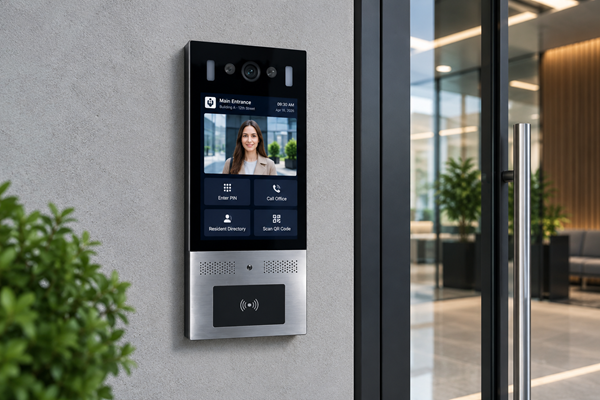
- Intercom: a gate intercom lets visitors reach residents and lets residents see and admit them remotely, which is the backbone of controlled guest access.
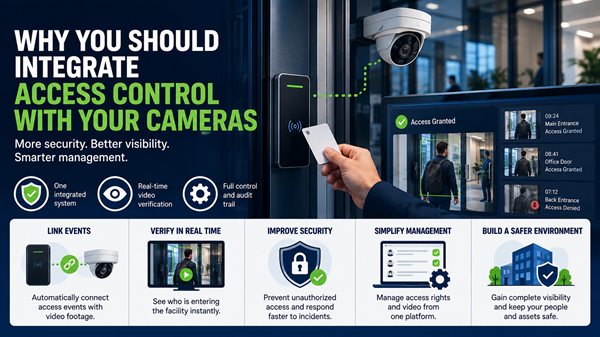
- Cameras: cameras at the entrance record every vehicle and visitor, capture plates for LPR, and give management a visual record tied to gate activity.
Designed together, the gate, intercom, and cameras give a community entry that’s convenient for residents, controlled for guests, and documented for management — instead of three disconnected pieces.
Reliability and Failover (Power Loss, Emergency Egress)
A community gate is critical infrastructure, so what happens when something fails matters as much as how it works day to day. Gates should have battery backup so they keep operating through a power outage, and a clear, well-understood behavior on total failure — and that behavior has to put life safety first, allowing residents to get out and emergency responders to get in without delay.
Fire departments and first responders typically require a reliable means of rapid entry, such as an approved override, so a gate never becomes an obstacle in an emergency. These are exactly the details a professional designs in from the start rather than discovering during an incident. This is general guidance rather than legal or fire-code advice, and the specific requirements for your community are worth confirming with the relevant authorities.
Maintenance Considerations
An automated gate has moving parts exposed to the weather, and in the New York area that means heat, rain, and a freezing winter working on it year-round. Motors, hinges, sensors, and safety devices need periodic service to keep the gate operating smoothly and safely, and the safety sensors that stop a gate from closing on a car or a person are not optional upkeep.
Budgeting for routine maintenance — rather than waiting for a stuck gate at the worst moment — keeps the entrance dependable and extends the life of the hardware. A service relationship with the integrator who installed it usually means faster help when something does need attention.
How 4Wires Secures Communities
Securing a gated community is a balancing act — easy for residents, controlled for visitors, and dependable when it counts. 4Wires Communications designs and installs community access across the New York area, working with access platforms like Keri and intercoms from Akuvox, DoorKing, and Aiphone. We set up resident vehicle access, visitor management, pedestrian and amenity control, and the camera and intercom integration that ties it together — with the battery backup and emergency access that keep the gate safe in any situation.
Planning access for your community? Learn more about our access control installation services, or reach out for a free on-site assessment.